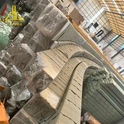
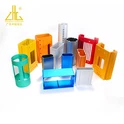
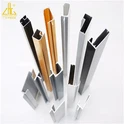
Aluminum extrusion CNC machining is a process that involves using a computer-controlled machine to shape aluminum extrusion parts according to specific designs. The process is widely used in various industries, including automotive, aerospace, construction, and electronics. It provides precision, speed, and accuracy when it comes to producing different shapes and sizes of aluminum parts.
The process of aluminum extrusion CNC machining involves three main steps: design, programming, and machining. First, the design is created using computer-assisted design (CAD) software, which allows for precise dimensions and specifications to be created. Next, the design is programmed into the CNC machine, which uses a series of tools to cut, shape, and form the aluminum extrusion into the desired shape. Finally, the machined part is finished, usually through sanding, polishing, or anodizing.

One of the major benefits of aluminum extrusion CNC machining is its ability to create complex shapes and patterns with high accuracy and consistency. This makes it an ideal process for creating parts that are difficult or impossible to produce through traditional manufacturing methods. Additionally, the process is highly automated, which improves production efficiency and reduces labor costs.
Another benefit of aluminum extrusion CNC machining is its versatility. It can be used to produce parts with a wide range of sizes and shapes, from small intricate details to large structural components. This makes it an ideal process for industries that require a variety of different parts for different applications.
However, there are some limitations to aluminum extrusion CNC machining. For example, the process is generally limited to producing parts with symmetrical shapes, which means that more complex shapes may require additional processes. Additionally, the process can be expensive and time-consuming, especially for custom designs or one-off parts.
In conclusion, aluminum extrusion CNC machining is a versatile, efficient, and precise process that is widely used in various industries. Its ability to produce complex shapes and patterns with high accuracy and the consistency makes it an ideal choice for producing different sizes and shapes of aluminum parts. However, its limitations must be taken into consideration when choosing this process for a specific application.